
If you’re trying to work out how to grow a small business online, you’ve probably already tried a few things. There’s a Facebook page, an Instagram account that gets updated when someone has a spare hour, a website built a few years back, and maybe a month of Google Ads that nobody fully trusted.
What’s missing is usually not effort. It’s a plan. This guide walks through how to grow a small business online one step at a time, so you know what to do first and what can wait.
How to grow a small business online: the short answer
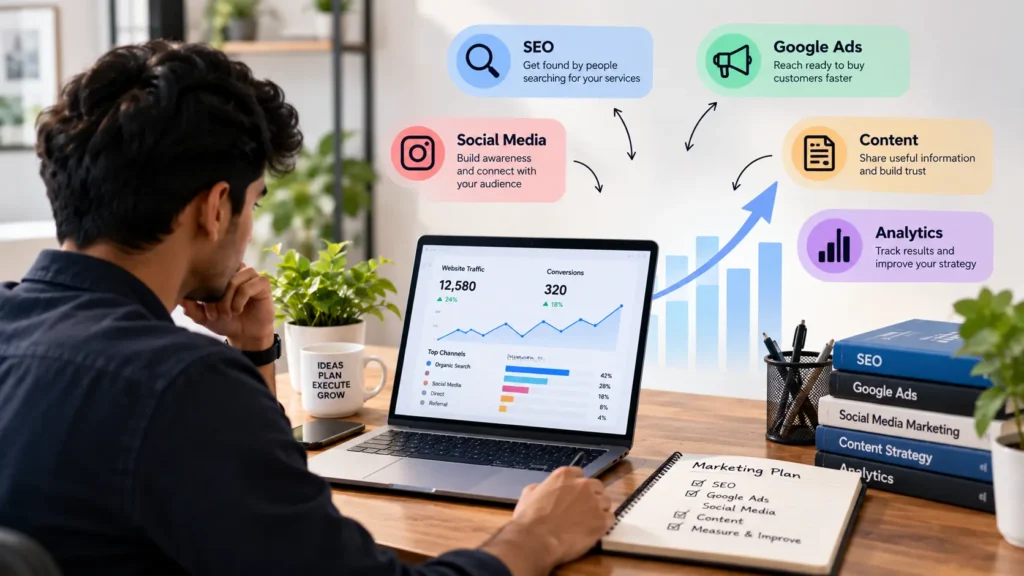
Start with a clear goal, understand your customers, fix your website, pick a few channels that suit your budget, and measure what happens. Then repeat. You don’t need a big team or a big budget to begin. What you need is a simple order of work, so every post, ad and page has a reason to exist. A digital marketing consultant can guide you through this and save you from costly guesses, but the steps are the same whether you do it yourself or get help. The rest of this guide takes each step in turn.
Why many small businesses get stuck
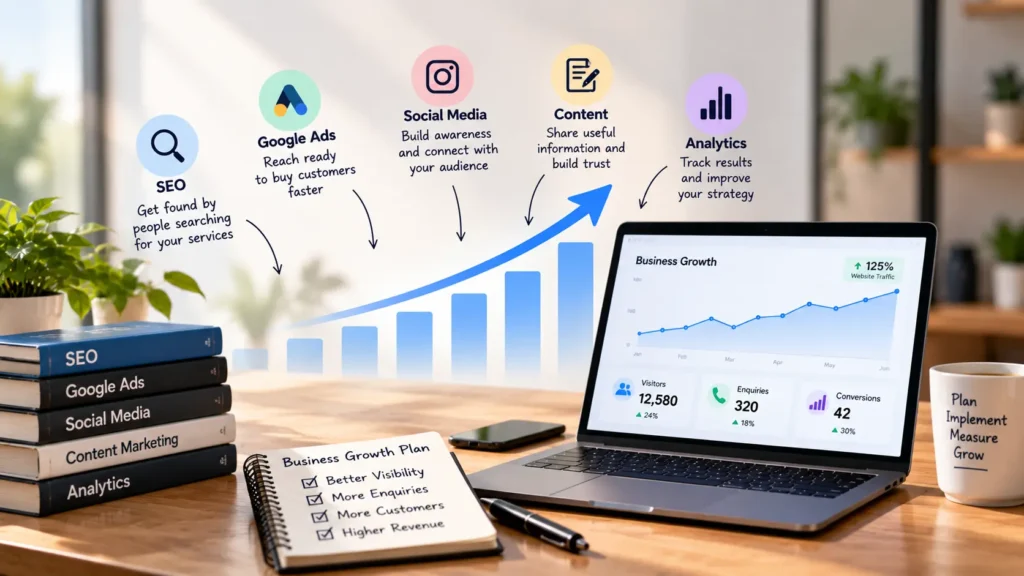
One business posts every day and gets almost no enquiries. Another pays for ads without knowing which clicks became customers. A third has a good-looking website that Google barely sends anyone to.
The tools differ, but the cause is usually the same: things are done without a plan tied to what the business wants. With a small budget, every wasted post or click hurts more.
Step 1: Get to know your business and customers
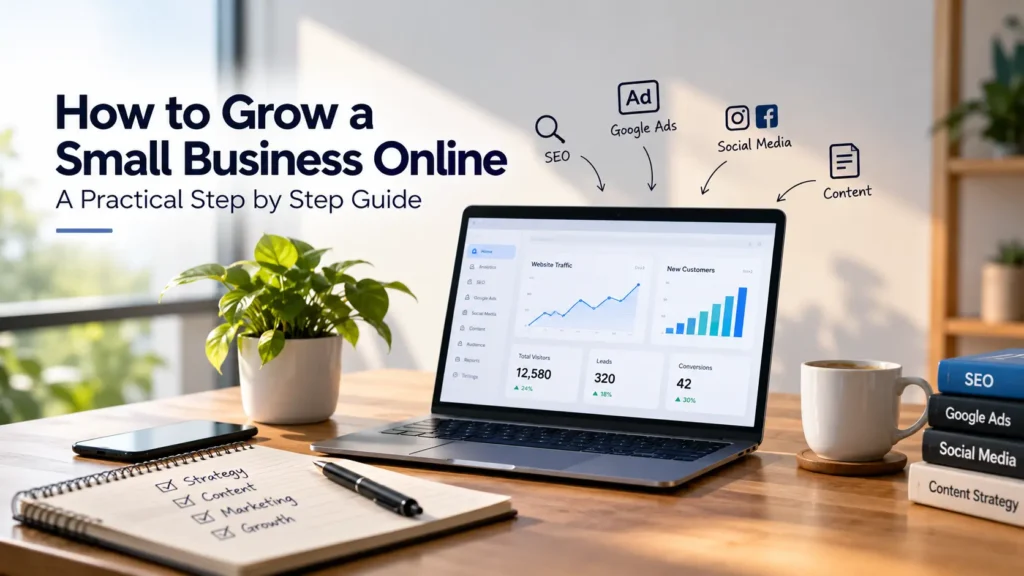
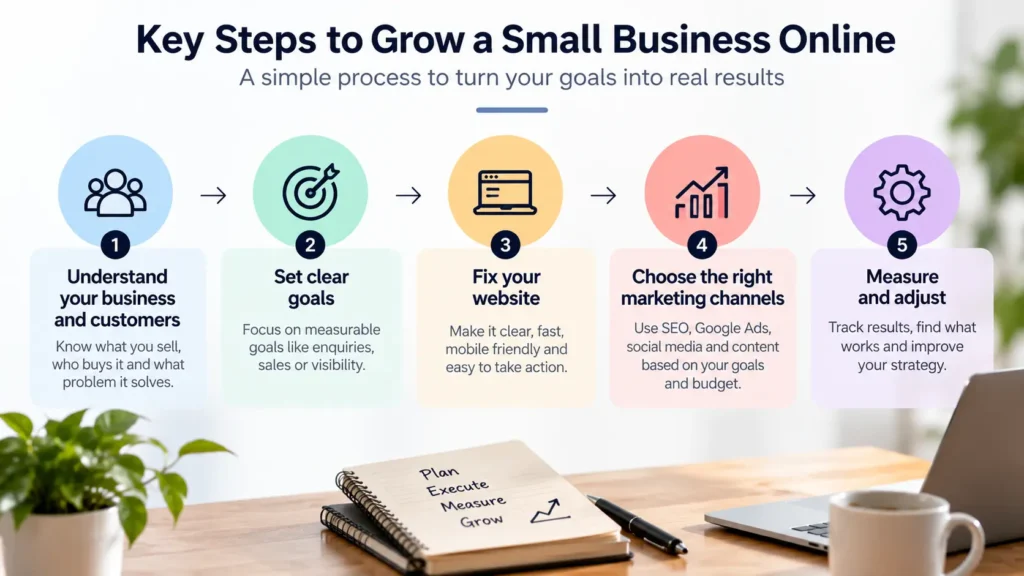
Anyone learning how to grow a small business online should start here. Write down what you sell, who buys it, what problem it solves and why someone would choose you over the next option. A shop serving one town needs a different plan from a firm selling services nationwide. Talk to your best customers and note what they asked before they bought.
Step 2: Look honestly at what you already have
Review your website, search visibility, social accounts, ads and any data. The aim isn’t a long list of faults. It’s finding the few fixes that matter most. If Google can’t find your service pages properly, more blog posts won’t help yet.
Step 3: Set goals you can measure
“Grow online” is too vague. Turn it into something specific, like more qualified enquiries, more online orders or better visibility for one service. Ten new followers feels nice. Three new enquiries from the right customers pays the bills.
If you’re asking how to grow a small business online on a tight budget, clear goals protect your money more than anything else. Not sure where you stand? Get in touch through my website and we can start with your goals.
Step 4: Choose channels that fit your budget
You don’t need to be everywhere. SEO suits businesses that people actively search for. Google Ads help test demand or reach people who are ready to buy. Social media builds awareness, and content helps customers judge whether you know your stuff.
The right mix depends on your goals, audience, competition and budget. If you’re weighing the first two, my guide on SEO vs Google Ads shows how to decide.
Step 5: Make the website do its job
When you think about how to grow a small business online, the website is where everything lands. People decide there whether to get in touch. It needs clear navigation, a good mobile experience, fast loading and information that’s easy to follow. Small changes, like a clearer service page or a simpler contact form, often help more than a full redesign.
Step 6: Build SEO and content around real questions
SEO helps search engines find and understand your pages. Start with what people actually type into Google. A service page explains what you do, who it’s for and how to get in touch, and a supporting article answers the questions around it.
SEO is slow, and anyone who guarantees rankings is promising something they can’t control.
Step 7: Run ads and social media carefully
Writing an ad is the small part. The real work is choosing keywords, targeting the right location, managing the budget, building a matching landing page and tracking conversions. On social media, useful posts beat constant ones: quick tips, answers to common questions and project updates.
Start small, learn what works, and only then add more money.
Step 8: Measure and adjust
Measuring is the part of how to grow a small business online that most people skip. Every campaign produces numbers: clicks, visits, engagement, conversions. If your site gets plenty of visitors but few enquiries, looking at where they land and what they do next can point to the reason. More traffic isn’t better if those visitors were never going to buy.
That’s what turns marketing into a loop, where each round of results guides the next. My guide on how to build a digital marketing strategy goes deeper.
How to grow a small business online: putting the steps together
Picture a small business that wants more customers for one service. Keyword research shows what people need to know, the website explains the service clearly, and SEO helps those pages get found. A small Google Ads test shows which search terms bring real enquiries, and analytics shows what worked. None of it is complicated alone. The value comes from doing it in order.
When a digital marketing consultant can help
A consultant is useful when you know you need direction but aren’t sure where to start. Look for someone who asks about your business before pitching and can explain why they recommend what they do. Ask what’s included, how results are measured and how often you’ll review progress.
Be careful with anyone who guarantees rankings, traffic or sales by a set date. Results depend on demand, competition, budget and how well you handle the enquiries that arrive.
Frequently asked questions
Frequently asked questions
What is the first thing to do when learning how to grow a small business online?
Set one clear goal, such as more enquiries for your main service, and learn who your best customers are. Everything else follows from that.
How long does it take to grow a small business online?
It varies. Paid ads can bring visibility sooner, while SEO and content take longer. Be wary of fixed promises.
Do I need a consultant or an agency?
A consultant suits you when you need direction. An agency may fit better if you want someone to run everything day to day.
Working with me
I’m Hariprakash K, a digital marketing professional based in Thrissur, Kerala. I work across SEO, Google Ads, social media marketing, content creation and strategy, data analytics and website development. I like to mix creative ideas with what the data says, because ideas without evidence are guesses, and numbers without ideas rarely lead anywhere interesting.
If you want help with how to grow a small business online, you can explore my services and approach on Hariprakash K’s digital marketing website.
Final thoughts on how to grow a small business online
Here’s the short version of how to grow a small business online: know your customers, set goals you can measure, choose a few channels that fit your budget, and check the results so each step informs the next. You don’t have to do everything at once, and you don’t need to be on every platform.
Start with where you stand and what deserves your attention first.How to Grow a Small Business Online, Fix the basics on your website, publish content that answers real customer questions, and test ads in a small way before spending more. Review your numbers regularly, and your business can grow online at a pace you can manage.
Learning how to grow a small business online is a process, not a one time project. Some steps will bring results sooner than others, and that’s normal. If you’re not sure where to begin, reach out through my website and we can look at your business together.